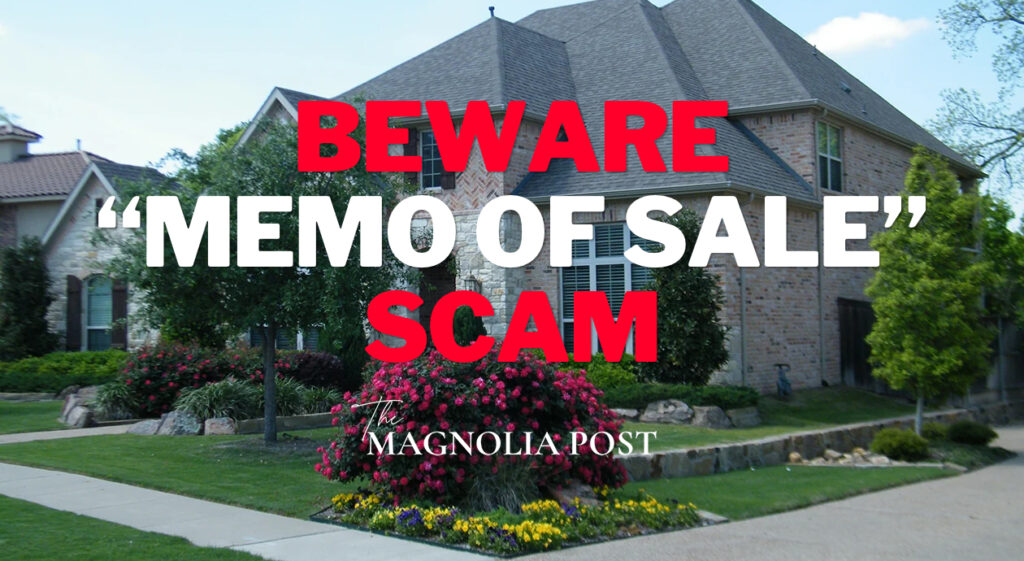
NASHVILLE – The Tennessee Department of Commerce & Insurance (TDCI) is joining a group of state regulators to warn unsuspecting homeowners of the rise of “memo of sale” schemes that promise quick cash sales but only create potentially expensive long-range problems for homeowners.
In addition to TDCI, the Tennessee Real Estate Commission, the Tennessee Attorney General’s Office, Tennessee REALTORS®, American Land Title Association (ALTA), the Tennessee Bankers Association, and the County Officials Association of Tennessee are alerting Tennessee homeowners, seniors, and their caregivers in the rise of “memo of sale” scams.
How does the “memo of sale” scam work?
Scammers pretend to be legitimate buyers and advertise that they buy houses in cash and promise homeowners quick, guaranteed sales. Behind the scenes, however, they have no intent to close on the property. Instead of buying the home with cash, they record a memorandum (“memo”) of sale with the county clerk’s office on the home’s title. This memo notifies any other possible buyers about the pending sale and can prevent the homeowner from selling to another potential buyer.
No sale but plenty of headaches.
Once the company refuses to close on the sale of the property, the homeowner is left unable to sell to a new buyer unless the memo of sale is cleared. Predictably, the company that once offered to buy the home will now demand money – typically tens of thousands of dollars – in order to clear the title, even though it has breached the contract. The homeowner is left with little recourse.
Third-Party Buyers.
These scammers may say they are real-estate wholesalers. Wholesale real-estate sales are a process in which the original buyer finds a third-party to take their place in the transaction. The new third-party buyer then promises to pay more money than the original buyer agreed to pay. Unfortunately, the seller does not get the extra money. The original buyer keeps the difference between what the seller agreed to accept and what the new third-party agrees to pay. In Tennessee, wholesalers must make certain clear and conspicuous disclosures of their intent to find a third-party buyer.
Things to keep in mind when selling your home:
- Pay attention to whether the sales contract contains language about recording a memorandum. Consider negotiating language that details when the memorandum will be removed.
- Ask clearly if the buyer intends to wholesale the property.
- Get everything in writing.
- Use TDCI’s Public Search to check the license status of the individual you who approaches you.
- If your buyer is demanding payment to release a memo, consult a licensed Tennessee attorney for guidance.
If you believe you have become the victim of a memo-of-sale scam, please file a complaint with the Tennessee Attorney General’s Office Division of Consumer Affairs.