


Fourth through eighth grade students that visit the Hardeman County STEM Center this school year can expect to be amazed, academically challenged, and learn they actually do enjoy learning about science, technology, engineering, and math. That is a direct result of the creative learning environment STEM Center Director Deana Sain has established for students in Hardeman County Schools. Through her personal education, awards of recognition, and the acquisition of grants, Sain has made a name for Tennessee STEM education in Hardeman County.
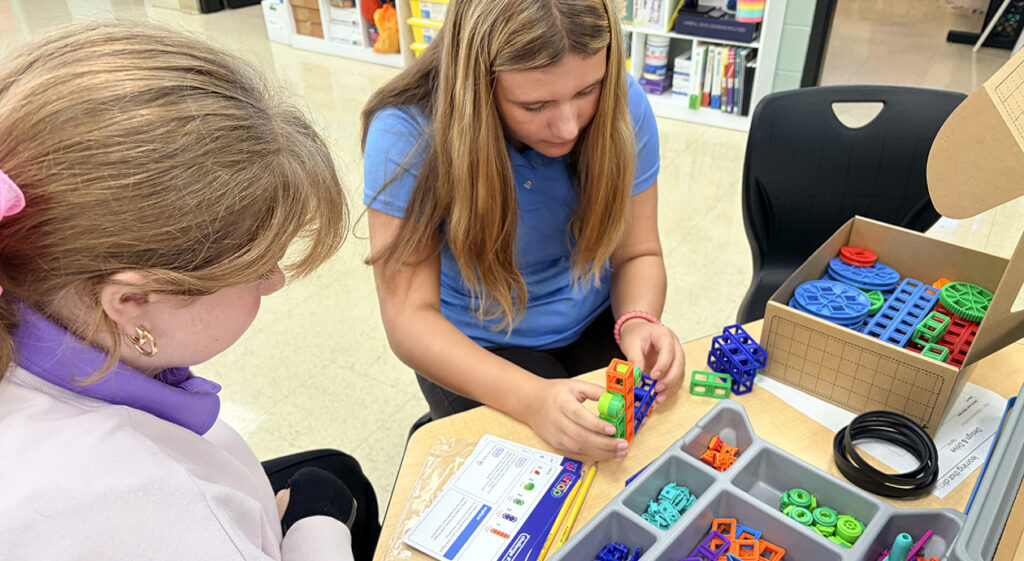
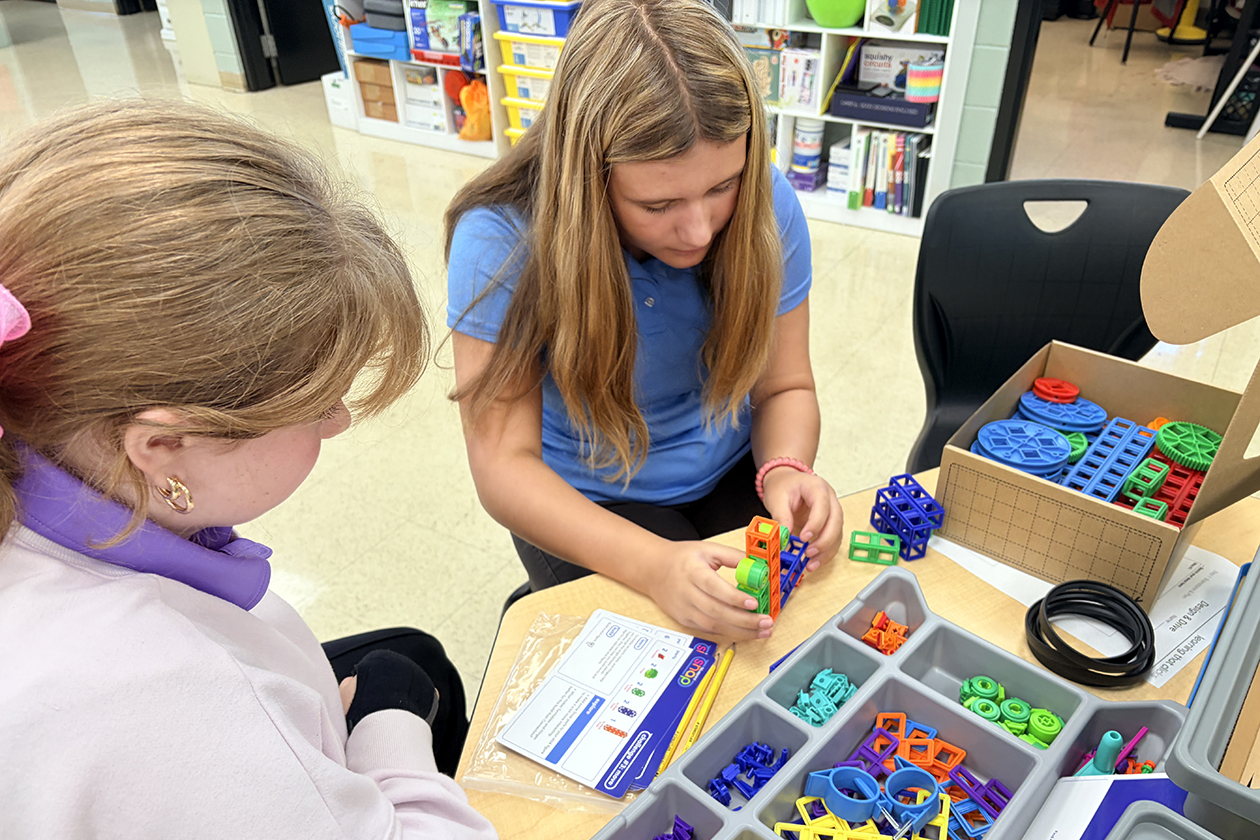
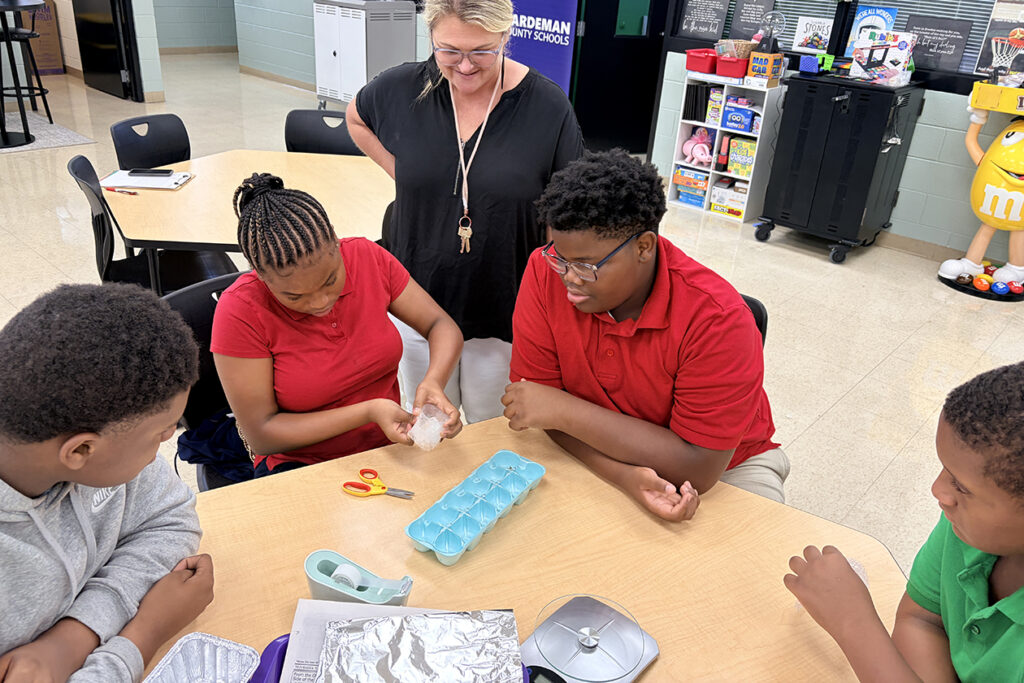
“Students can look forward to a wide variety of hands-on STEM experiences this year. I want students to do more than just read about science and engineering—they get to build, test, problem-solve, and sometimes even make a mess while they learn. Students will work on engineering challenges, robotics and coding, drones, virtual reality, agriculture and gardening, environmental science, circuitry, physical science, and design projects,” said Sain. “I will also continue bringing real-world STEM careers into the classroom through partnerships with local businesses and community leaders. One of the things I enjoy most is watching students who may not initially consider themselves ‘science kids’ become completely engaged when they get the chance to build something or solve a problem.”
A lot of work in grant writing goes behind the scenes to receive the funds and equipment Sain has added each year to the STEM Center.
“I write the grants myself. The STEM Center started in August 2023, and I have written and been awarded $42,000 in grants for our students. I think one of the biggest things that has helped is that I don’t start with, ‘What can I buy?’ I start with, ‘What do our students need, and what experience do I want them to have?’,” said Sain. “I try to identify a real need, develop a project around that need, connect it to Tennessee standards, explain how students will actually use the materials, and show how the project can make a difference for our students. I also try to find ways to connect our projects to our community and to real STEM careers. Grant writing takes time, persistence, and sometimes a lot of applications before you receive a ‘yes.’ But every ‘no’ allows you to revise and try again. When I receive a grant, I know that it isn’t just funding equipment—it is funding experiences for children.”
Sain spends her time writing grants as much of the equipment she has added to the center would not be possible through a normal school budget. She credits Dr. Christy Smith for starting the STEM Center with the TDOE ISM (Innovative Schools Model) Grant. Through a recent Society for Science STEM Grant, Sain purchased PocketLab Voyager sensors and G-Force Bundles. Sain noted these tools allow students to collect actual scientific data and investigate phenomena rather than simply reading about them.
“These resources move learning from the textbook into the real world. Students can collect data, analyze it, design solutions, test their ideas, discover that their first design doesn’t always work, and then improve it. That process is incredibly valuable because it teaches students that failure isn’t the end of the learning process—it is part of engineering and scientific discovery,” said Sain. “A student might design a structure that collapses, a device that doesn’t work, or a circuit that won’t light. Instead of simply being told the answer, they have the opportunity to ask, ‘Why didn’t it work, and what can I change?’ That is the kind of problem-solving and perseverance I want students to carry with them far beyond the STEM Center.”
When asked about being an award recipient, Sain is quite humble despite seemingly earning at least one each school year.
“The recognition is certainly an honor, but what means the most to me is what it represents for our students. Every award or grant gives me another opportunity to bring something new to a child who may not otherwise have access to it,” said Sain. “I don’t see these accomplishments as being about me. I see them as recognition of what can happen when you believe rural students deserve the same opportunities as students anywhere else. Our students are capable of doing amazing things when we give them the resources and opportunity to do them.”
Most recently, the STEM Center received the Society for Science STEM Grant and the TVA STEM Robotics Award. Sain views receiving those funds as “another piece of a larger picture” in STEM education she is building for Hardeman County students.
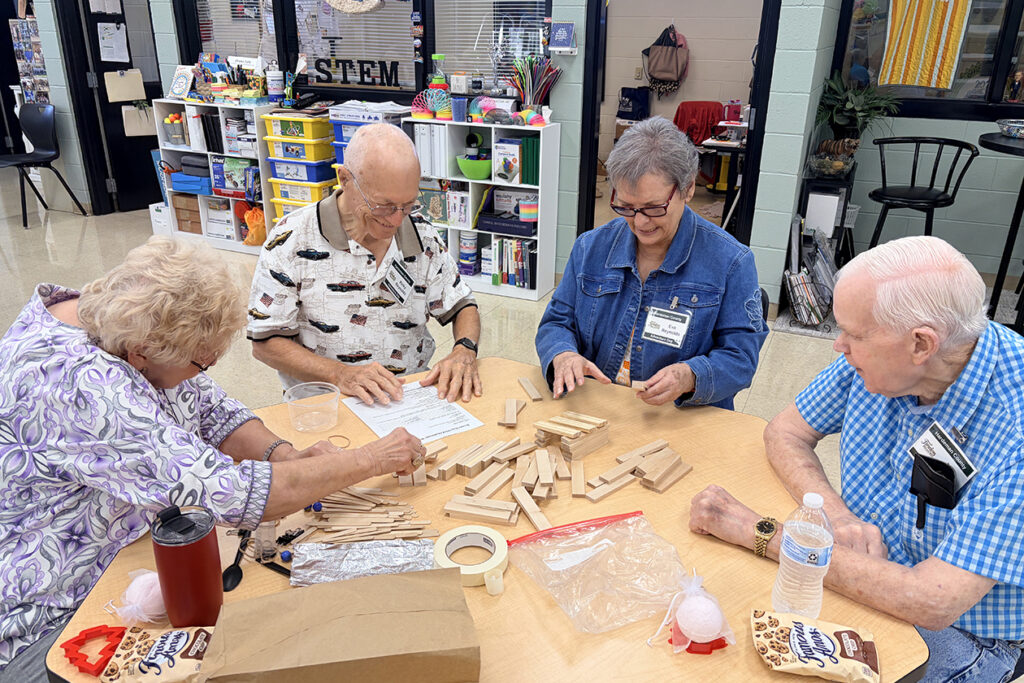
“One of the most meaningful was a $5,000 Society for Science STEM Grant, which provided the funds for our PocketLab and environmental science equipment. We also received a TVA/TSIN STEM Grant that supported our “Hardeman Harvest: Growing STEM from the Ground Up” project. That project combined STEM, agriculture, engineering, and technology through our greenhouse and drone activities. We have also received support through other organizations, including grants for outdoor classroom and garden projects and additional STEM materials,” said Sain. “One of the most special things at the STEM Center is our NASA Moon Tree. A tree grown from a seed that traveled around the Moon aboard Artemis I was sent to us, and we planted it behind the STEM Center. We named it James Moontree, and it has continued to grow. I love that the tree represents what I want our STEM Center to be—a place where students can look beyond what they think is possible. A student from Hardeman County can study a NASA Moon Tree, build an engineering project, fly a drone, or design a solution to a real-world problem.”
Excitement for learning this school year is not limited to the students. Sain shared what she is looking forward to sharing with the students this year as well as in the future.
“I am especially excited about expanding our engineering opportunities. I want students to see themselves as engineers and problem-solvers, not just students completing a school assignment. We will be using our new engineering materials to give students authentic design challenges where they have to work together, make decisions, build prototypes, test them, and improve them,” said Sain. “I am also excited about continuing to develop our greenhouse and outdoor STEM experiences. And honestly, I’m excited about the things we haven’t even planned yet. When you work with students, they often take a project in a direction you never expected. Those are some of my favorite moments.”
Although Sain appreciates the awards received, for the STEM Center and personally, and the equipment she has been able to purchase, those accomplishments do not compare to what she sees happening in Hardeman County education.
“I think the biggest accomplishment is the culture we have created around STEM. The STEM Center has become a place where students from across Hardeman County can come and experience things they may never have had the opportunity to experience otherwise,” said Sain. “We have had students build bridges, engineer structures, work with drones, explore virtual reality, study plants and ecosystems, experiment with energy and electricity, work with robotics, and solve all kinds of engineering challenges. But if I had to choose one accomplishment, it would be seeing students become curious. When a child walks out of the STEM Center still talking about what they built, asking questions, or wanting to know how something works, that’s success to me. The equipment is wonderful, but the curiosity it creates is even more important!”
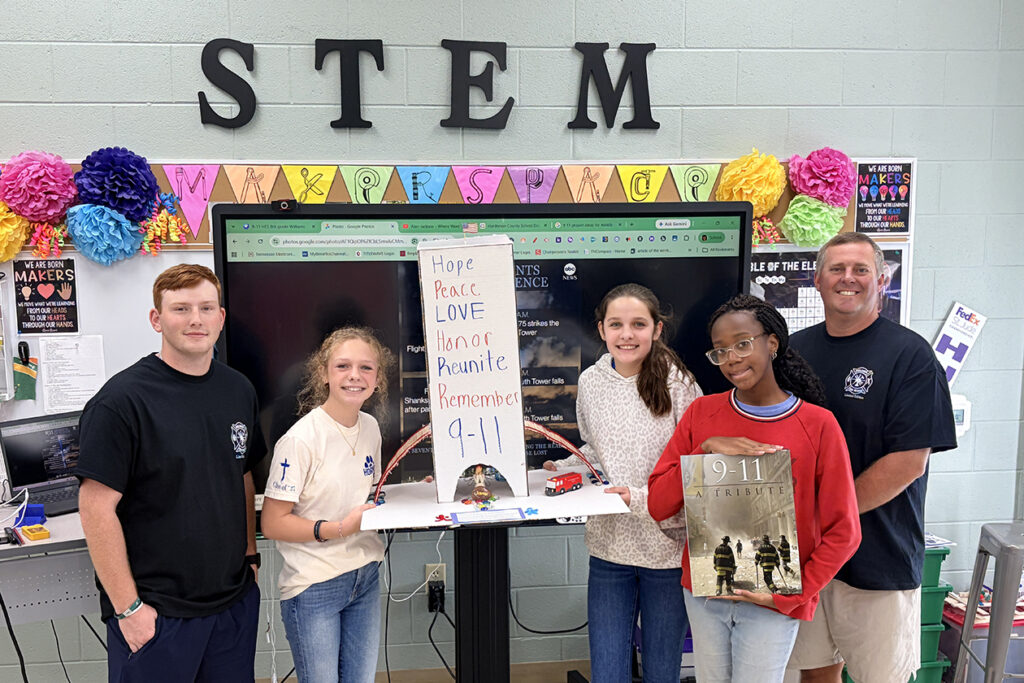
Sain reflects on the journey of bringing STEM education to the Hardeman County Schools, which really started in 2003 when she was a teacher at Bolivar Elementary School, the first NASA STEM School in the State of Tennessee.
“I have been teaching for 30 years, and one of the things I have learned is that children don’t always remember the worksheet they completed, but they remember the things they actually did,” said Sain. “My goal is to give our students experiences they will remember—and hopefully inspire some of them to pursue STEM careers that they may have never considered before.”